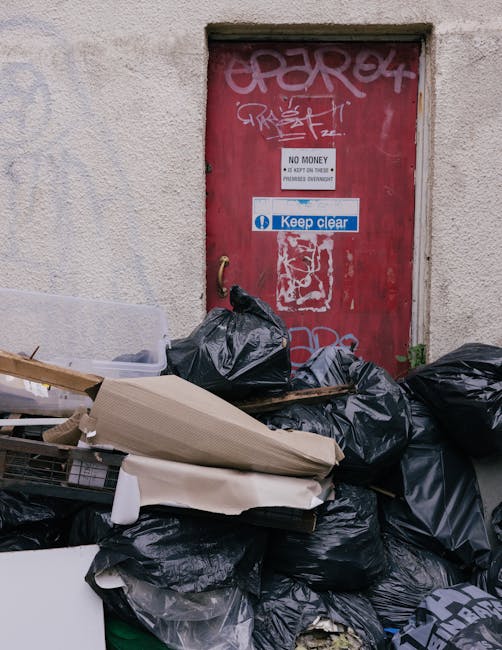
Tower Hamlets council rules for bulky rubbish in Whitechapel: a practical, local guide
If you live or work in Whitechapel, bulky rubbish has a habit of turning up at the worst possible time. A sofa that will not fit through the hall. A broken wardrobe in the spare room. A fridge you have been meaning to deal with for ages. The rules around Tower Hamlets council rules for bulky rubbish in Whitechapel can feel a bit confusing at first, especially if you are trying to stay on the right side of local collection requirements, avoid fly-tipping problems, and get the place cleared without hassle.
This guide breaks the whole thing down in plain English. You will see how bulky waste is usually handled, what to check before you book or place anything out, which mistakes cause the most trouble, and when it makes sense to use a private clearance service instead. Nothing fluffy. Just the practical stuff people actually need.
Table of Contents
- Why Tower Hamlets council rules for bulky rubbish in Whitechapel matters
- How Tower Hamlets council rules for bulky rubbish in Whitechapel works
- Key benefits and practical advantages
- Who this is for and when it makes sense
- Step-by-step guidance
- Expert tips for better results
- Common mistakes to avoid
- Tools, resources and recommendations
- Law, compliance, standards, or best practice
- Options, methods, or comparison table
- Case study or real-world example
- Practical checklist
- Conclusion
- Frequently Asked Questions
Why Tower Hamlets council rules for bulky rubbish in Whitechapel Matters
Bulky rubbish is not the same as everyday household waste. A bin lorry will not take a mattress, a large table, a broken washing machine, or the contents of a crowded flat after a clear-out. In Whitechapel, where space is tight and shared entrances are common, getting bulky items wrong can quickly become a nuisance for neighbours and a problem for the street.
The rules matter for three reasons. First, they help keep pavements and front gardens clear. Second, they reduce the risk of items being left out too early, damaged by rain, or mistaken for fly-tipping. Third, they help you decide whether the council route is the neatest option or whether a private clearance is more sensible. Let's face it, nobody wants to spend half a weekend dragging a sofa downstairs only to find it was never eligible for collection in the way they expected.
There is also a time-and-stress angle. Whitechapel is busy. Traffic, narrow access, controlled parking zones, basement flats, and stairwells that seem to get steeper with every box - all of that makes bulky waste handling less straightforward than it sounds. A clear understanding of the rules saves embarrassment and, usually, a bit of money too.
Key takeaway: bulky rubbish in Whitechapel is best handled with a quick check of collection rules, item eligibility, access constraints, and timing. A rushed guess is where most problems start.
How Tower Hamlets council rules for bulky rubbish in Whitechapel Works
While service arrangements can change, bulky waste collection through a council normally follows a fairly simple pattern: you identify the items, check what is accepted, arrange a collection or booking if required, and place items out in the approved way and at the approved time. Sounds easy. In practice, the details matter.
For Whitechapel residents, the main things to think about are:
- Item type: some items are treated as bulky household waste, while others may be classed differently because of weight, electrical parts, construction debris, or hazardous content.
- Preparation: items may need to be separated, drained, dismantled, or made safe before collection.
- Access: shared stairwells, basement steps, or limited loading access can affect whether a collection is practical.
- Presentation: bulky items usually need to be placed where they can be collected safely and without blocking the pavement.
- Timing: leaving items out too early is often where complaints start, especially in a dense street like many in Whitechapel.
It is also worth noting that the council route is often designed for standard domestic needs, not large one-off clear-outs from a whole flat, garage, loft, or office. If you are dealing with a bigger job, a specialist service such as house clearance or flat clearance may be a better fit because it handles volume, lifting, sorting, and access in one go.
And yes, the difference between "one awkward item" and "half a room's worth of stuff" really does change the whole equation.
Key Benefits and Practical Advantages
Following the correct bulky rubbish route is not just about avoiding a ticking-off. There are practical benefits that make life easier straight away.
- Cleaner shared spaces: items are less likely to block hallways, stoops, or communal entrances.
- Lower fly-tipping risk: when people know what to do, less waste gets dumped in the wrong place.
- Better neighbour relations: in a dense area, even a small pile of furniture can affect how the whole street feels.
- Safer handling: heavy or awkward objects are less likely to cause injuries if you plan them properly.
- More predictable costs: you can compare a council-style collection with private removal or reuse options before committing.
For many people, the biggest advantage is peace of mind. You know what you are doing, what you are not doing, and what to expect next. That sounds boring, maybe, but boring is underrated when you have a broken wardrobe leaning against the wall and no lift in the building.
If the job is not just one item but a wider clear-out, it can be useful to compare broader services such as furniture clearance and furniture disposal so you can separate what can be reused, recycled, or removed in one visit.
Who This Is For and When It Makes Sense
This topic matters to a surprisingly wide range of people. In Whitechapel, bulky rubbish comes up in all sorts of everyday situations:
- tenants moving out of a flat and needing old furniture removed
- homeowners replacing sofas, beds, or wardrobes
- landlords clearing left-behind items after a tenancy
- families sorting a loft, garage, or spare room
- small businesses disposing of office furniture or storage units
- builders or tradespeople dealing with non-structural waste that is too large for normal bins
There are also timing reasons. Maybe the council collection window does not line up with your move-out date. Maybe the item is too heavy to shift safely. Maybe the building has awkward access and you cannot drag a fridge through a narrow staircase without risking damage. In those cases, a private removal option can simply make more sense.
That said, the council route can be ideal for a small number of acceptable domestic items. If you only have one or two things and the schedule works for you, it is often the simplest path. The trick is knowing which side of that line your situation falls on.
Step-by-Step Guidance
If you want the process to go smoothly, break it into stages. Rushing it is where people get caught out.
- List the items clearly. Write down exactly what needs removing. "Stuff from the spare room" is not a list. "One wardrobe, one mattress, two chairs" is.
- Check whether anything is reusable or recyclable. A good number of items still have life in them. Even if they are no longer wanted, they may not need to be treated as immediate rubbish.
- Separate bulky waste from hazardous or specialist items. Paints, chemicals, gas cylinders, and similar materials need careful handling and should never be mixed in with ordinary household clutter.
- Measure access. Narrow stairs, internal corners, or a basement flat can make a collection straightforward or impossible. A tape measure saves headaches.
- Decide whether council collection is enough. If it is a small, eligible load, that may be fine. If it is a full room, a loft, or a mix of furniture and general rubbish, a broader service may suit better.
- Book or arrange the collection. Follow the relevant process carefully, and note any instructions about where to place items, when to put them out, and what is not allowed.
- Prepare the items. Remove loose contents, fold down chairs if possible, unplug appliances safely, and make the load easier to handle.
- Keep the area clear. Do not block neighbours' access or create a trip hazard. In a Whitechapel street, that is a quick way to annoy everybody before breakfast.
- Take a photo before and after. Not glamorous, but useful if you need to show what was left out or prove that the area was cleared.
If you are dealing with a larger domestic clearance, home clearance can be a more rounded option because it is built for mixed items, awkward access, and the kind of jobs that never stay neatly in one category.
Expert Tips for Better Results
In our experience, the best bulky rubbish jobs are the ones that are slightly over-prepared. Not overcomplicated. Just prepared enough that nothing needs to be guessed on the day.
1. Group items by type before you move anything
Keep furniture, electrical items, and loose rubbish separate where possible. It helps you see what you actually have and reduces the chance of something being left behind because it was hidden under a pile of cushions.
2. Protect the route out of the property
Use old blankets, cardboard, or dust sheets on corners and floors if you are moving items through a tight hallway. A scuffed wall on a damp London afternoon is one of those little annoyances that stays with you longer than it should.
3. Think about building rules as well as council rules
Shared blocks, managed estates, and converted houses often have their own rules about collection times, lift use, fire exits, and obstruction. Council guidance is only part of the picture.
4. Do the awkward items first
If there is a heavy sofa or a broken bed base, tackle that before the smaller clutter. Momentum helps. Once the big thing is gone, the rest of the space feels easier instantly.
5. If in doubt, ask before you place it out
That one step can save a collection from being refused. And refused collections have a funny way of becoming everyone else's problem until someone has to deal with them again.
For the sharp edge cases - overfilled flats, hidden loft junk, or mixed waste after a refurb - it can be worth looking at loft clearance or builders waste clearance rather than trying to shoehorn the job into a standard bulky item collection.
Common Mistakes to Avoid
Most problems with bulky rubbish are avoidable. The trouble is, they tend to happen when people are busy, moving house, or trying to clear up in a hurry. Which is basically always.
- Leaving items out too early: it attracts complaints and can count as an obstruction.
- Mixing ordinary waste with bulky items: collections can be rejected if the load is not presented correctly.
- Assuming every item is acceptable: electricals, mattresses, and specialist items may have different handling requirements.
- Forgetting building access: a collection may be fine in theory but impossible if the route is blocked.
- Ignoring weight and safety: one badly lifted chest of drawers can ruin a back. Not worth it.
- Not checking whether items can be reused: a lot of furniture does not need to be dumped if it can be passed on or sorted separately.
Another mistake is underestimating how much stuff there is. What looks like "a few bits" in a flat can become two van loads once it is all stacked in the hall. Funny how that works.
Tools, Resources and Recommendations
You do not need fancy equipment to deal with bulky rubbish well, but a few simple tools make a difference.
- Measuring tape: for doors, stair corners, lift sizes, and item dimensions.
- Gloves: especially useful for sharp edges, splinters, and dusty storage items.
- Basic trolley or sack truck: handy for heavy items if access allows.
- Marker pen and tape: helpful for labelling what stays, what goes, and what must not be mixed.
- Dust sheets or old blankets: good for protecting floors and door frames.
- Phone camera: useful for records, estimates, and before/after photos.
For anyone comparing the broader waste routes, the following pages can help you understand related services and business policies before you book anything:
- waste removal support
- pricing and quotes
- recycling and sustainability
- insurance and safety
- health and safety policy
If you are arranging a clearance for work rather than home, it may also help to review business waste removal or office clearance so the service matches the type of waste you actually have.
Law, Compliance, Standards, or Best Practice
When bulky rubbish is involved, compliance is mostly about avoiding nuisance, preventing unsafe handling, and making sure waste goes to the right place. The exact council process can change, so it is always sensible to check the current local arrangements before you act. That is the careful answer, and the honest one.
From a best-practice point of view, a few principles are worth following every time:
- Do not obstruct pavements, entrances, or fire routes.
- Do not place waste out before the permitted time.
- Keep mixed waste under control. Furniture, household rubbish, and specialist items should be handled separately where needed.
- Use proper lifting methods. If an item is too awkward, do not force it.
- Use responsible carriers. Waste should go to lawful processing, reuse, or disposal routes.
For landlords, agents, and business owners, the practical compliance standard is even higher. A badly managed clearance can upset tenants, neighbours, customers, and building managers all at once. Not ideal. For those situations, it is often smarter to choose a service that can document the removal clearly and keep the process tidy from start to finish.
Options, Methods, or Comparison Table
There is no one perfect method for bulky rubbish in Whitechapel. The right choice depends on how much you have, how fast you need it gone, and how easy access is. Here is a simple comparison.
| Option | Best for | Pros | Watch-outs |
|---|---|---|---|
| Council bulky waste collection | Small number of eligible domestic items | Familiar process, suitable for straightforward jobs | May have item limits, timing rules, and access conditions |
| Private bulky item removal | Faster turnaround or awkward access | More flexible, often easier for mixed loads | Cost depends on volume, labour, and disposal type |
| Full clearance service | Large clear-outs, mixed rubbish, whole rooms or properties | Hands-on help, better for stairs and heavy lifting | May be more than you need for a single item |
| Reuse or donation route | Usable furniture and appliances | Extends item life, reduces waste | Not suitable for damaged or unsafe items |
If you are deciding between a small collection and a bigger tidy-up, ask yourself one simple question: am I dealing with a few items, or am I really dealing with a clear-out? That answer usually points you in the right direction.
Case Study or Real-World Example
Imagine a second-floor flat near the Whitechapel Road area. The occupant has a bed frame, a mattress, a small wardrobe, and a broken chair to get rid of before a move-out. At first glance, that sounds manageable. But then you notice the narrow landing, the tight stair turn, and the fact that the building shares its entrance with other flats. Suddenly, the practical side of the job becomes the real issue.
In a case like that, the resident has three realistic options. They could check whether the council will collect the items as bulky rubbish. They could arrange a private pickup for the furniture only. Or they could book a broader flat-level removal if they also need old bags, shelves, and extra clutter taken away at the same time.
What usually works best is the option that reduces handling twice. In other words, if you will need to move the bed frame out of the way anyway, it may be smarter to deal with everything in one pass. Less lifting, less stress, fewer "I'll do that later" moments.
A small but important detail: the resident in this example took photos of the staircase and measured the hallway before booking. That tiny bit of prep prevented a wasted slot. Honestly, that is the sort of thing people forget right until the last minute.
Practical Checklist
Use this before you arrange or place out bulky rubbish in Whitechapel.
- Have I listed every item clearly?
- Do any items need special handling or separate disposal?
- Are the items safe to move as they are?
- Will they fit through the property route without damage?
- Have I checked building rules, if applicable?
- Do I know the collection timing or booking requirements?
- Have I kept pavements, exits, and shared areas clear?
- Could any item be reused, donated, or sold instead?
- Is this a small collection or a larger clearance job?
- Would a more flexible service be easier than a standard bulky collection?
If several of those answers are uncertain, pause for a minute and sort them out. It is far easier to do that than to discover a problem with a sofa halfway down a staircase.
Conclusion
Tower Hamlets council rules for bulky rubbish in Whitechapel are there to keep waste moving safely, fairly, and without causing headaches for other people nearby. The smartest approach is usually simple: identify the items, check the relevant rules, prepare the load properly, and choose the right route for the size of the job. For a single item, the council route may be enough. For mixed waste, tricky access, or a bigger clear-out, a broader removal service can save a lot of time and energy.
What matters most is not guessing. A little planning goes a long way, especially in a busy part of London where stairwells are narrow, street space is precious, and people notice when things are left out of place. Do it once, do it properly, and the whole job feels lighter.
Get a free quote today and see how much you can save.
Frequently Asked Questions
What counts as bulky rubbish in Whitechapel?
Bulky rubbish usually means large household items that do not fit in normal bins, such as sofas, wardrobes, mattresses, tables, and white goods. The exact acceptance rules can vary by collection type, so it is worth checking before you book or place items out.
Can I leave bulky items on the pavement in Whitechapel?
Not unless the collection process specifically allows it and you follow the timing and placement instructions. Leaving items out too early or blocking the pavement can cause problems for neighbours and may be treated as an obstruction.
Does the council collect fridges and freezers?
Sometimes electrical items are treated separately because of their size, weight, and components. It is best to confirm whether your item is accepted as part of a bulky collection or needs another handling route.
How many items can I put out for bulky waste collection?
That depends on the service rules in force at the time and the type of items involved. A small household load may be fine, while a larger clear-out may need a different service altogether.
What should I do before bulky rubbish is collected?
Remove personal belongings, separate anything hazardous, and make sure items are safe to handle. If possible, measure access routes and keep the path clear so nothing gets damaged on the way out.
What if my flat has no lift?
That is a common Whitechapel issue. If stairs are narrow or steep, a standard bulky collection may be awkward. In that case, a service that includes lifting and carrying can be much easier.
Are mattresses treated differently?
Often, yes. Mattresses can have their own handling rules because of their size and disposal requirements. Check how they are classified before putting them in with other furniture.
Is it cheaper to use the council or a private clearance service?
For a small, simple load, council collection can be the more economical choice. For larger jobs, private clearance may look more expensive at first but can save time, effort, and repeat handling. It really depends on the job size.
What happens if I leave rubbish out too early?
It can create obstruction, attract complaints, and sometimes lead to the items being missed or refused. In a busy area like Whitechapel, timing matters more than people expect.
Can bulky rubbish include broken furniture from a house move?
Yes, usually broken furniture is part of bulky waste if it fits the accepted category. For a whole property move, though, a broader house clearance or home clearance may be more practical than trying to piece things together item by item.
What is the best option for a full flat clear-out?
If you are clearing a whole property, a specialist flat clearance service is often the most efficient choice because it is built for mixed items, access issues, and larger volumes.
How do I know whether waste is being handled responsibly?
Look for clear information about waste handling, safety, pricing, and company policies. Pages such as recycling and sustainability and insurance and safety can give you a sense of how a service approaches the job.
Should I book bulky rubbish removal before or after I move out?
Usually before, if possible. It is easier to manage access, make decisions about what stays or goes, and avoid last-minute stress. A booked slot before moving day tends to make everything calmer, even if only slightly.
What if I am not sure whether my item is allowed?
When in doubt, separate it and check carefully rather than guessing. That one small pause can prevent a failed collection or a messy lift-out later. Better to be a bit cautious than to drag the wrong thing all the way downstairs.